
There, There by Tommy Orange
In “THERE, THERE” by TOMMY ORANGE, 12 strangers make plans to attend the Big Oakland Powwow in Oakland, California.
Opal Viola Victoria Bear Shield, who has raised her sister’s three grandchildren, hopes to catch a glimpse of her oldest nephew in full regalia dancing for the first time. Her sister, Jacquie Red Feather, is newly sober and driving from New Mexico with the man who first got her pregnant as a teenager on Alcatraz Island. Tony, a young man with Fetal Alcohol Syndrome, which he calls “the Drome,” gets mixed in with Calvin, Charles, Carlos and Octavio, a group of men planning to rob the powwow to make up a drug deal debt. One character, Dene Oxendene, plans to attend the powwow as a voyeur, hoping to document people’s stories and how their stories fit into the story of the urban Native American. These are just a small handful of the characters in Orange’s debut novel.
The degrees of separation could be difficult to follow if crafted by a less-skilled writer, but Orange deftly threads the stories together with the skill of a spider weaving a web. The reader may find him or herself flipping back and forth among stories and marveling at the seemingly inconsequential role one person plays in several other stories before making an appearance in their own, often heartbreaking, accounts.
What does it mean to be an urban Native American? What does it mean to be half-Native but raised by your white mom? This fleeting identity is at the center of Orange’s novel; it begins with a searing look at the United States’ treatment of Native Americans that serves as an entry point to these answers, as told through each character’s story.
In the prologue, Orange writes, “We (Urban Indians) know the sound of the freeway better than we do the rivers, the howl of distant trains better than wolf howls” and that “being Indian has never been about returning to the land. The land is everywhere or nowhere.” Few of the characters know who they are as individuals, much less who they are in the context of the history of their culture. But maybe that is what Orange is positing with “There There;” there is not one way to be a good or authentic Native American. Maybe Native heritage is more dependent on this country’s treatment of Native tribes and nations, and the bearing of centuries of abuse and torture on the psyche. Orange’s use of epigraphs is extraordinary, but the following by James Baldwin feels especially representative of the entire novel: “People are trapped in history and history is trapped in them.”
Overall, “There, There” is an exceptional and well-developed novel. My chief complaint is that I wanted more of each character. The conclusion, however is spectacular. To avoid spoilers, I will only note that the conclusion is electrifying, spectacular and worthy of a Shakespearean tragedy.
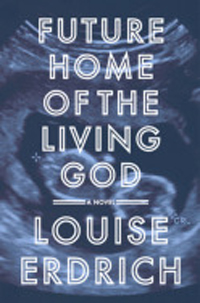 Future Home of the Living God: a novel by Louise Erdrich — Set in the not too distant future, or maybe just an alternative present, Erdich explores what might happen in a world where humans seem to be devolving. Cedar Hawk Songmaker is a Native American who has been adopted by a white family. And she has a secret: she’s pregnant. In an increasingly dystopian world, can she ensure the safety of herself, her child, and her families? I spent a lot of time frightened for Cedar and she journeys between worlds, both literal and spiritual. Erdich’s story is firmly within the realm of Atwood’s The Handmaid’s Tale.
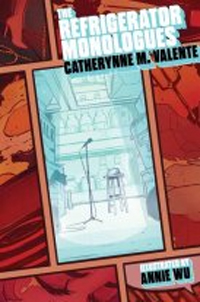 The Refrigerator Monologues by Catherynne Valente — In the world of comic books, there is a term for a select group of characters: Women in Refrigerators. This refers to the disproportionate amount of female characters that are killed in the name of furthering storylines. Valente tells the stories of a series of women characters — no one directly from comics, but recognizable if you’re familiar with many of the big name series — who have been written out of the comics world and spend their time in the afterworld. The characters cover the gamut of emotions associated with such deaths, but also speak to the strength of female friendships. A quick read for anyone who wants a different perspective on the world of comics.
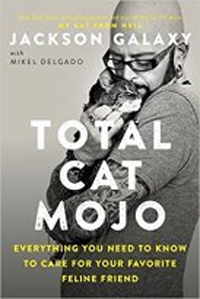 Total Cat Mojo by Jackson Galaxy — Let’s be honest: I’m a crazy cat lady. I grew up a dog person, but years ago, my husband introduced me to cats and it’s been all downhill from there. Like any responsible pet owner, I want to make sure my cats are living their best lives. And that means Jackson Galaxy. He’s pretty much the go-to guy for cat people. And TOTAL CAT MOJO is a wonderful resource for all stages of a cat’s life. Plus, he gives great advice for troubleshooting common cat problems like litter box struggles, dealing with stressed kitties, and introducing new family members — from feline to human.
 Today’s featured titles come courtesy of the library’s High School Book Club. At their last meeting, these awesome folks opted to read books which had been made into movies. Their inspiration led me to a book which spawned a modern classic film then right to a book about the making of the film itself.
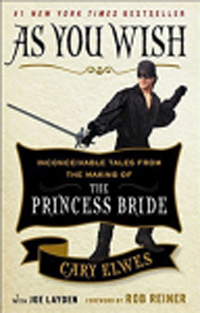 Reiner and William Goldman created magic both on the page and on the movie set according to actor Cary Elwes in his book, As You Wish: Inconceivable Tales From the Making of the Princess Bride. Elwes, who played Westley in the film, offers an entertaining, behind-the-scenes glimpse of movie making from audition to premiere. In some ways a typical Hollywood memoir, he moves beyond potential pitfalls and captures with delight the camaraderie that brought Goldman’s script to life.